非線形書記体系ハンドブック
Handbook of Nonlinear Writing Systems : Complex Processes and Learning Challenges
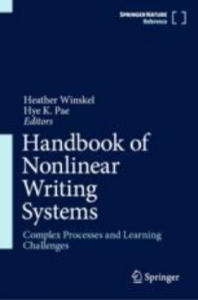
Editors: Heather Winskel & Hye K. Pae
2026:08 712 p. ISBN 978-3-032-01972-1 (Springer) -DE
EUR699.99
☆在庫特価61% OFF!弊社在庫限定(特価EUR249.99/通常EUR699.99)
Web販売価格 ¥49,838 (税込) / 標準価格 ¥67,371 (税込)
※通常価格:Web販売価格 ¥129,584 (税込) / 標準価格 ¥175,171 (税込)
*2026年10月26日時点の価格です。実際の価格は、為替レートや出版社の都合により変動いたしますので、最新の価格は以下オンラインストアリンクをご参照ください。
*Web販売価格は、紀伊國屋書店BookWeb Proでご注文され、付帯作業を伴わない納品を行い、弊社標準書式による請求書を発行し遅滞なくお支払いただく場合、あるいは、クレジットカードでお支払いいただく場合に適用される販売価格です。
概要
本書は、「非線形書記体系(Nonlinear Writing Systems)」という新鮮な切り口から、アルファベットを前提として発展してきた従来の識字研究の枠組みを超えて、漢字、かな、ハングル、アラビア文字などの多様な書記体系の複雑性と学習プロセスに焦点を当てた画期的なハンドブックです。全35章にわたり、各言語の文字体系の構造的特徴、読み書きの習得過程、認知メカニズム、教育上の課題について学際的かつ包括的に論じます。
特に注目されるのは、中国語や韓国語と並び、日本語の書記体系が大きく取り上げられている点です。本書では日本語を扱う独立のセクション(Part IV: Japanese)が設けられ、日本語表記体系の特徴から、漢字の認知、語彙処理、眼球運動、識字発達にいたるまでを、5章にわたって体系的に解説しています。日本の大学に所属する研究者や日本出身の研究者が9名も執筆に参加し、日本語における読字・書字の発達過程、かなと漢字の併用がもたらす認知的特徴、第一言語・第二言語としての日本語習得について最新の研究成果を紹介しています。
日本語、中国語、韓国語をはじめとする多様な書記体系に関する研究を英語で体系的に学べる貴重なレファレンスであり、言語学、心理学、教育学、読書科学、識字研究の研究者・大学院生はもちろん、多言語教育や日本語教育に携わる実務家にも有益な一冊です。
価格照会・ご購入
※本件についてのお問い合わせ、お見積りについては、最寄りの紀伊國屋書店営業所もしくはこちらのお問い合わせフォームまでご連絡ください。
日本の大学または日本出身の寄稿者
・Terry Joyce(多摩大学)第13章共同執筆
・増田 尚 Hisashi Masuda(広島修道大学)第13章共同執筆
・本田 圭佑 Keisuke Honda(Dublin City University)第14章執筆
・中山 真理子 Mariko Nakayama(東北大学)第15章共同執筆
・吉原 将大 Masahiro Yoshihara(東北大学)第15章共同執筆
・三輪 恒一 Koji Miwa(名古屋大学)第16章執筆
・井上 智洋 Tomohiro Inoue(香港中文大学)第17章共同執筆
・三杯 亜美 Ami Sambai(筑波大学)第21章共同執筆
・Yeongsil Ju(目白大学)第21章共同執筆
内容明細
Part I. Introduction
- Introduction to the Volume
- Toward a Typology of Linearity in Writing Systems
- The Normativity of Linearity in Writing and Linguistics
Part II. Alphabetic Writing Systems With Diacritics
- The Role of Diacritics in the Recognition of Words Across Different Writing Systems
- Multilinear Featurality in Roman Script African Orthographies
Part III. Chinese
- The Chinese Writing System and Reading
- Learning to Read Chinese: What Are the Unique Characteristics of Cognitive-Linguistic Skills?
- Understanding the Processing of Chinese Compounds: Insights from Pinyin Typing
- Perceptual Span During the Reading of Chinese Sentences
- Brain Changes with Chinese Reading Development and Disorders
- Divergent and Convergent Paths in Chinese Reading Development: A Systematic Review of Recent Advancements in L1 and L2 Research
- Unique Characteristics of Cognitive Constructs and Methodology in Chinese Word Reading
Part IV. Japanese
- Contemporary Japanese Writing System: An Overview of Its Component Scripts and Graphematic Conventions
- Morphography and Polyvalence: Factors Contributing to Reading Kanji
- Orthographic Processing and Lexical Competition in Japanese Scripts
- Eye Movement Control in Morphographic Word Recognition
- The Orthographic Orthodoxy: How Japanese Flies in the Face of Typical Literacy Development
Part V. Korean
- Analyzing the HunMinJeongEum: The Nexus of the Universe, Language, and Writing
- The Effects of Deleting Interword Spaces on Korean Reading
- The Role of Syllables in Korean Word Recognition and Reading: A Meta-Analysis
- Reading Processes and Cognitive Factors Influencing Reading Development in Hangul Among Korean-Speaking Children
Part VI. Abjads
- Eye Movements in Reading Arabic and Hebrew: A Cross-Language Comparison
- Reading in Arabic: Challenges and Insights
- The Role of Morphological Awareness in Reading Hebrew Among Novice Readers
Part VII. Abugidas
- Nonlinearity in Indian Writing Systems and Implications for Literacy Acquisition
- Biliteracy Modulates Cross-Language Orthography Activation
- The Role of Orthographic, Lexical, and Syntactic Factors During Reading: The Case of Hindi and Urdu
- Literacy Acquisition in Kannada Akshara
- Nonlinear Characteristics of Reading and Writing Thai
Part VIII. Under-Studied Writing Systems
- Reading in Non-linear Orthographies: The Case of Urdu
- Bharati Braille and Print Bangla: The Effect of Orthographic Linearity on Spelling and Syllable Processing
- Learning to Read the Manchu Writing System
- Reading in Tagalog
- The Role and Implications of Diacritics in Turkish
Part IX. Implications and Future Research
35. Looking Ahead: Theoretical, Methodological, and Pedagogical Advances in Reading in Nonlinear Scripts
下記ページで、洋書担当スタッフが精選した学術洋書をご紹介しております。是非ご覧ください。
洋書精選タイトル一覧
(紀伊國屋書店 学術洋書部)